Biblical Moments with Frank King
Weekly Bible-based teachings by Evangelist Frank King





Episodes
Dec 28, 2024
Dec 28, 2024
15 min
“The harvest truly is plenteous, but the laborers are few” (Matt. 9:37, KJV). This was Jesus’ assessment of His day. It is still true today.
These days, God is seeking more laborers to work for the Kingdom. More people who want to be a part of what God is doing these last days. In this episode, Frank King addresses the kind of servant God wants.
Our idea of the kind of servant God wants can differ significantly from what He actually wants. Young David is a good example. He was the youngest of the sons of Jesse. His seven brothers came before Samuel the prophet one by one. Even Samuel thought the oldest son was God’s choice for king (1 Samuel 16:6). But God rejected them all and chose David.
What did God see in David that He did not see in his seven brothers? He saw David as a young man after God’s heart. That’s what God was looking for in the new king after He rejected Saul the current king (1 Samuel 13:14).
To be a man after God's heart means you are passionate about the things that please God. You like what He likes, and you shun the things He hates. We can be that kind of person only after we have become born again by the Spirit of God.
But being born again is not enough. To be a woman or a man after God’s heart, you must allow the Holy Spirit to govern your life. The more time you spend with God and in the things of God, the more your heart becomes one with His.
What Being a Person After God's Heart Is Not
Being a person after God’s heart does not mean you are perfect. David sinned a great sin. He got another man’s wife pregnant. Then he ordered the husband to be murdered to cover up his sin. That is certainly not the behavior of a perfect person.
But God’s not looking for perfect people because they don’t exist. He wants servants who are passionate about Him. And when they miss God, they become broken before Him. That’s what David did when he acknowledged his sin. That is reflected in the words of David in Psalm 51.
Also, being a person after God’s heart does not mean you know how to do what God wants you to. David certainly didn’t know anything about being a king. He was just a shepherd before. But he had a heart after the heart of God. And being that kind of person means more to Him than your experience or ability. When your heart pursues God’s heart, He can take you where He wants you to be.
What the World Needs Now
As it was in Jesus’ day, so it is today. The harvest is plenteous, and the laborers are few. The question is, are we or will we become the kind of servant God wants us to be. Will we commit to being a woman or man after God’s own heart. That’s the kind of servant He wants in these last days.
Dec 23, 2024
Dec 23, 2024
14 min
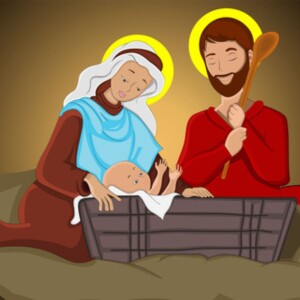
For many, Christmas is the most wonderful time of the year. In America, people travel far to be with loved ones this time of the year. But this episode focuses on the real meaning of Christmas for people of faith.
The birth of Christ is the most enduring event in history. Nearly 2000 years later, the world is still talking about Him. Millions around the world are passionately following His teachings.
In the days of King Ahaz, Isaiah the prophet gives us an amazing Messianic prophecy. “Behold, a virgin shall conceive, and bear a son, and shall call his name Immanuel“(Isaiah 7:14, KJV). This virgin birth was given as a sign to King Ahaz that God was with His people.
Why? Because the king of Israel and the king of Syria had joined together to make war against king Ahaz who was king of Judah. They had vowed to destroy Jerusalem and to replace Ahaz with another king. King Ahaz was afraid, and the people of Jerusalem were afraid.
In hindsight, we know this sign from heaven was a reference to the birth of Christ. That’s because the verse refers to a virgin bearing a son. Furthermore, according to the verse, this son shall be called Immanuel. This is consistent with the words found in Matthew 1:23: “They shall call his name Immanuel.”
Though God promised to give this sign from heaven, Ahaz didn’t live to see it. It was more than 700 years after God promised it that Christ was born. To us that is a long, long time. But to God a thousand years are as a day, according to 2 Peter 3:8. So, to God, it was only a few days from the prophecy to the birth of Christ.
"God With Us"
Immanuel, the prophetic name assigned to Jesus, literally means God with us. This name is a reference to the deity of Christ. When Jesus was born, He was the Almighty God living in human flesh among us. He said to Philip, He who has seen me has seen the Father” (John 14:9, NASB).
Because of this incarnation, Jesus can personally relate to our struggles in the flesh. While on earth, He was “tempted in all things as we are, yet without sin” (Hebrews 4:15, NASB).
The good news of Christmas is that the Son born of a virgin was a sign from heaven that God is with His people. if you have placed your faith in Christ, know that God is with you. Sometimes, it may not feel that way, but God is with you. Moreover, through Christ, you have peace with God.

Dec 17, 2024
Dec 17, 2024
15 min
The grace of God manifests itself in countless ways. Anytime He shows us His goodness when we deserve otherwise, that constitutes grace. This podcast episode focuses on the grace of God pertaining to our salvation. This grace is sometimes referred to as God’s saving grace.
The doctrine of salvation is the most important Christian doctrine in the entire Bible. We can disagree on, even be wrong about some aspects of Christian theology and still be OK. But we can’t afford to be wrong on how to be saved because that has eternal consequences.
In his letter to the church at Ephesus, Paul writes, “By grace you have been saved” (Ephesians 2:5, NASB). Grace refers to things that are unmerited, meaning things we don’t earn or deserve. Accordingly, God’s saving grace refers to our unmerited salvation through Christ.
Paul said what he said because God saved us “even when we were dead in our transgressions” (verse 5a). In other words, we did not earn our salvation. And there is a good reason for that. We can’t, no matter how hard we try. None of us deserves salvation. The only way we can receive salvation is that God gives it to us when we place our faith in Christ.
God's Grace Under the Law
But those who lived under the Old Testament (OT) dispensation were under the Law and not under grace. So, were they more righteous than we are so that they earned their salvation by successfully keeping the Law? Or did God lower the bar and grade the OT believers on a curve so they could make it into heaven?
To answer that question, consider what the Bible reveals about Abraham. At the age of 75, he and his barren wife Sarah were childless. Given their reality, it was not naturally possible for them to have a child. Nevertheless, God promised Abraham to bless them with a child. Moreover, God promised to bless Abraham with as many children as there were stars in the heavens. This because he would become the father of nations.
"Then he believed in the Lord; and He reckoned it to him as righteousness" (Genesis 15:6, NASB). This means that even Abraham was justified by what he believed and not by what he did.
The point is that no one has ever earned salvation or righteous standing with God. Even the OT believers were recipients of God’s saving grace.
Sad but true, so many people in the world today need to be saved. The good news is that everyone can afford to be saved because Christ has paid the cost for all who believe to be saved.

Dec 9, 2024
Dec 9, 2024
16 min
Prayer was never meant to be a religious exercise. But for many people who pray, it’s no more than that. Prayer is supposed to revolutionize your life. In this episode, Evangelist Frank King addresses how to win through prayer.
The devil wants your prayer life to be no more than a religious ritual. He wants you to think God does not answer prayer. Because if you ever arrive at that wrong conclusion, you will cease to be serious about prayer.
Prayer is one of the most phenomenal weapons God has given us. Think about it; what is the main thing we do when we have loved ones who are not saved and are not open to someone talking to them about the Lord? We can’t make them listen to us. But we can pray to God and believe He can reach them to open their heart.
And parents, what do we do when we have a child a thousand miles away in college, and we can’t be there to try to keep him or her out of trouble? We can cover them in God’s divine protection through prayer.
Prayer can stay the hand of the enemy. It has the power to move mountains in our life. The devil knows the power of prayer. That’s why he so vehemently opposes those who commit themselves to a life of prayer.
Daniel's Prayer
Daniel the prophet is a good example of how to win through prayer. After praying to God, he fasted and sought the face of God for twenty-one days (Daniel 10:3). He did not stop praying until he received the answer to his prayer. One reason many people fail to receive from God is they fail to be persistent in prayer. Jesus says we must pray always and not lose heart (Luke 18:1, NASB).
When the angel arrived to answer Daniel’s prayer, he revealed that God heard his prayer the first day he prayed (Daniel 10:12). But the angel encountered opposition from one he referred to as the “prince of the kingdom of Persia” (verse 13). The angel from heaven was detained for 21 days.
This account of Daniel’s experience is priceless. It gives us a peek into the spiritual realm when we pray to God. It also gives us a model of sorts for how to win through prayer.
We must keep on believing God for what we are praying for. And we should act as if we expect God to answer our prayer. Jesus said, “All things for which you pray and ask, believe that you have received them, and they will be granted you” (Mark 11:24). In other words, believe now that you receive it, and then you will.
A clear takeaway from Daniel’s experience is that the devil understands the power of prayer. That’s why he will do anything and everything he can to keep you from having an effective prayer life. But if you believe when you pray, if you diligently seek the face of God, and if you refuse to give up, you will win through prayer.

Dec 3, 2024
Dec 3, 2024
14 min
As Christians, we often make claims about God based on the declarations of His Word. We say He is our healer or our deliverer or our provider, etc. But how willing are you to allow God to prove Himself to be the God you say He is in your life?
The world is looking for proof of our assertions. It’s one thing to quote the Scriptures about God’s goodness and His awesome power. But it’s another thing to produce some proof of the same.
Also, a big difference exists between trusting God because you have no other choice and trusting Him even when you have other options. Many times, when we face a challenge, we have options other than trusting God. If we stand in need of financial help, for instance, we can choose to trust God. Or we can go to a lending institution or to a person and borrow money.
But in this episode, Evangelist Frank King challenges believers to choose to trust God even when other options exist. This is how we allow God to prove Himself to be who we go around saying that He is to us.
It’s human nature, however, for us to not want to put ourselves through the rigor of trusting God—especially when we have other more comfortable options. Perhaps that’s why today we have so much comfortable Christianity and so few living testimonies about the goodness and the greatness of our God.
Religious Talk Is Cheap
Some believers talk a good game with respect to their faith in God. But it’s not enough to just talk about what we believe about Him. He wants us to live out our faith. That’s the gist of Christianity.
If we always talk about what we believe but are never willing to allow God to prove Himself in our life, all we have is dead faith. And guess what; even the devil has dead faith. They also believe and tremble (James 2:19). Moreover, God cannot prove Himself to be the God we claim He is if we don’t trust Him enough to allow Him to do so.
For example, consider the Israelites in the wilderness. When they arrived at the land God had promised their fathers, Moses sent twelve men to check it out. After 40 days, they returned to report their findings to Moses and the congregation. The spies confirmed that the land was fruitful. They brought back fruits as proof.
“Nevertheless, the people be strong that dwell in the land, and the cities are walled,” the spies said (Numbers 13:28, KJV). Hearing this, the people wept. Because of the giants in the land, they did not believe God could give them the land. God decreed that those unbelievers would never put foot on the Promised Land (Numbers 14:23).
They should have been willing to allow God to prove Himself. He had delivered them from bondage in Egypt. He fed them in the wilderness. They lived in the presence of His glory. It was their light in the darkness of night and their shade in the heat of the day.

Nov 26, 2024
Nov 26, 2024
14 min
On the fourth Thursday in November, we celebrate Thanksgiving Day in America. But also, God has called us to give thanks at all times. One of the most popular verses quoted this time of the year is found in 1 Thessalonians 5:18. Paul writes, “In everything give thanks, for this is the will of God in Christ Jesus concerning you.” That is the focus of this podcast episode.
Since God commands us to give thanks, thanksgiving is important to Him. Moreover, since He has commanded us to give thanks, He has already deemed Himself worthy of thanksgiving.
Sometimes, we know we are blessed. But we fail to give thanks because we are not being blessed the way we want to be blessed. Or because we have not been blessed the way someone else is being blessed. The point is that we can be blessed and be unthankful at the same time, if we are not careful.
Consider these words of Paul the apostle: “Be anxious for nothing, but in everything by prayer and supplication with thanksgiving let your requests be made known to God” (Philippians 4:6, NASB). According to this verse, even while you are making requests for the things you need, you should offer thanksgiving for the things you have.
For instance, you may not have a house, but while praying for one, thank God for the apartment that you have. Or thank Him for the friend who has taken you in until you get a place of your own. Or you may need a dependable automobile to get to work. But while you are praying for one, thank God for the bus route that gets you to work. Or for the colleague who goes out of his way to pick you up every morning.
God's Displeasure with His People
In the days of Moses, God delivered His people from slavery in Egypt, taking them to a land of their own. When they arrived at the outskirts of the Promised Land, the spies went in and checked out the land. They discovered that giants were living there and had to be driven out. When the spies returned and reported this finding to the people, they started murmuring, complaining and weeping. They even talked about returning to Egypt!
This made no sense. The people had been in bondage in Egypt all their life. God delivered them from Pharaoh and his army. God sustained them during their journey in the wilderness. Now they are one step from a land of their own. But instead of being thankful, the people were unthankful because of the giants in the land.
Israel’s failure to be thankful was due to a lack of faith in God. Joshua and Caleb, two of the spies, tried to encourage the people. They said, “If the Lord delight in us, then he will bring us into this land, and give it us” (Numbers 14:8, KJV). But the people refused to hear Joshua and Caleb.
The unbelieving and, hence, unthankful hearts of the people displeased the Lord. “How long will this people spurn Me?” God said to Moses (Numbers 14:11, NASB). “And how long will they not believe in Me, despite all the signs I have performed in their midst?”
God caused all those unbelieving and unthankful men to die in the wilderness.
If the only time we can give thanks is when all things go well for us, we need to deepen our faith so we can in everything give thanks.

Nov 21, 2024
Nov 21, 2024
15 min
Have you ever thought about God’s possible involvement in weather disturbances such as hurricanes and tornadoes? These can be deadly. For instance, Hurricane Katrina killed well over 1000 people. Do you wonder what God may be saying through these horrific events? In this episode, Evangelist Frank King addresses this subject.
Generally speaking, weather disturbances are natural occurrences. They come about when air and warm water interact, and the wet air above the water rises. This leaves an area of lower air pressure above the ocean’s surface which is quickly filled by air in the surrounding areas.
It’s interesting that the airline industry often refers to bad weather resulting in flight cancellations or delays as acts of God. This they do because they think that relieves them from having to compensate their angry customers for the flight delays. But, again, these dangerous weather disturbances are natural occurrences.
But God CAN send storms and hurricanes and other weather disturbances as well. Such a declaration goes against the grain of some people’s beliefs. God is a loving God they say. He would never send deadly and destructive storms and hurricanes.
But there are some deadly events in the Old Testament that clearly came from God. Some believers argue that the deadly events attributed to God in the Bible simply means He allowed them. That is understood to be the case at times. But, for instance, consider the 10 plagues in Egypt. God did not simply allow those ten plagues. He actively sent them—including a grievous hailstorm. In fact, God sent them to the intent that Pharaoh and the Egyptians would know that He was God (Exodus 7:5).
Two Storms from God
As further evidence that weather disturbances can come from God at times, here is a quick summary of two storms attributed to God in the Bible. One was aimed at Jonah the prophet. Not wanting to preach to Nineveh, he tried to run from God by boarding a ship. “But the Lord sent out a great wind into the sea, and there was a mighty tempest in the sea, so that the ship was like to be broken” (Jonah 1:4).
The storm was so violent that everybody on board began crying out to their God. It was not until the men on board threw Jonah overboard that the raging storm ceased. This made way for God to send a big fish to swallow up Jonah.
Also, in Psalm 107, the psalmist speaks of a storm commanded by God. “For He spoke and raised up a stormy wind, which lifted up the waves of the sea,” the psalmist writes (Psalm 107:25, NASB).
Regarding those caught in the storm, “Their soul melted away in their misery” (verse 26). Moreover, “They reeled and staggered like a drunken man, and were at their wits’ end” (verse 27). Clearly, this storm the psalmist attributes to God was life-threatening.
Even though the psalmist says God sent the storm, when the men prayed to God, He calmed the storm. “They cried to the Lord in their trouble”….”He caused the storm to be still, so that the waves of the sea were hushed” (verses 28-29).
Again, by and large, weather disturbances are natural occurrences. But God CAN send at times send storms and the like.

Nov 13, 2024
Nov 13, 2024
16 min
One of the most sacred moments in the local church is known as Holy Communion. It is also called the Lord’s Supper or the Eucharist. We partake of this ordinance because Jesus told His disciples to keep it to remember Him. He said as often we do so, we proclaim His suffering and His death until He returns.
During the Holy Communion, the bread and the fruit of the vine served are virtually the body and the blood of our Lord. Paul the Apostle addressed this sacred affair in his first letter to the church at Corinth. He says believers should examine themselves before eating the bread and drinking of the cup. He warned the church members of the consequences of failing to examine themselves accordingly.
“For this cause many are weak and sickly among you, and many sleep,” he writes (1 Corinthians 11:30, KJV).
Paul’s warning was to those he refers to as drinking unworthily (KJV). The truth is that none of us are morally worthy to eat the bread or drink of the cup. But worthiness here refers to the manner in which we partake of the Holy Communion. It is my view that at least two groups of people fall into the category of "drinking unworthily."
One is those who attend church but have chosen to reject Christ as their Savior. Some churchgoers refer to Holy Communion as communion service. But more correctly, it is the communion of the Lord’s body. And unbelievers do not belong to the body of Christ.
Another group that drinks unworthily are those believers who fail to examine themselves in light of the sanctity of the Lord’s Supper. Paul writes, “Let a man examine himself, and so let him eat of that bread, and drink of that cup” (verse 28).
It's About Calvary
The Holy Communion, or the Lord’s Supper, is more than a religious act for us. It was occasioned by the impending death of Christ on Calvary. He instituted it during the last moments He spent with His disciples before being apprehended to die for the sins of the world. He specifically told them to do it to remember Him.
Every time we partake of the Lord’s Supper, it points us to the barbaric cross of Calvary. The One who knew no sin was made sin for us.
Paul’s letter to the Corinthian church underscores a lack of a fear of God in the body. The same can be said for us today. People used to have more respect for the local church. Even when they walked by the church building. But now, a man will walk into the house of God and gun a pastor down. Or he will walk in the house of God and mass murder the people of God. This while they pray and study the Word of God. Sad but true, many believers today regard the Holy Communion as a common or unholy thing.